“What we have done for ourselves alone dies with us; what we have done for others and the world remains and is immortal.”
Albert Pike
Author
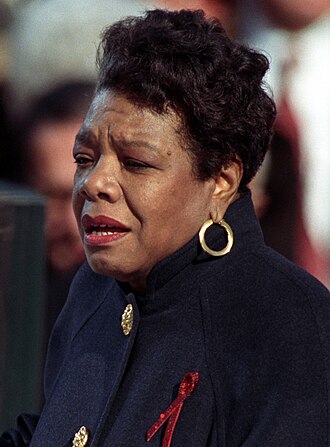
“When we give cheerfully and accept gratefully, everyone is blessed.”
Maya Angelou
Poet
“I alone cannot change the world, but I can cast a stone across the waters to create many ripples.”
Mother Teresa
Founder, Missionaries of Charity
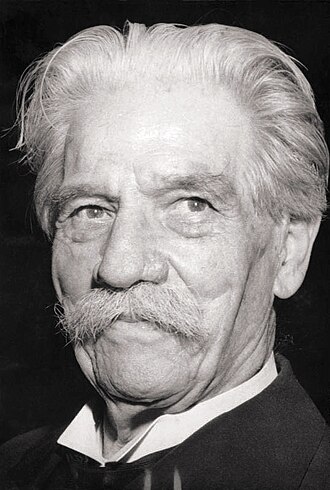
“Do something for somebody every day for which you do not get paid.”
Albert Schweitzer
Humanitarian and Nobel laureate
Turning education into employability
In a developing country like India, skills development matters as much as — if not more than — academic education. A marketable skill is what allows a young woman to find dignified work, or even to build a livelihood of her own. The Skills Development Program equips underprivileged girls with practical, employable skills they can use to pursue meaningful careers, gain financial independence, and lift their families out of poverty. Through paid training in high-demand trades and one-on-one mentorship, we help each enrolled girl turn what she learns into a career she can call her own.
The barriers girls face
Girls from economically weaker and marginalised backgrounds are often locked out of skills-building opportunities. The barriers they face are systemic and deeply rooted:
Financial constraints — nearly a quarter of India lives below the official poverty line, leaving no money for skills training.
Shortfalls in the education system — only about 2% of India’s workforce is formally skilled, compared with over 40% in countries like China, the USA and Germany, because vocational training is rarely part of mainstream schooling.
Inaccessible learning platforms — with only about 3% of rural Indians connected to the internet, online courses and urban training centres remain out of reach for most girls.
Gender inequality — from a young age, girls face discrimination in access to learning and economic resources, and are far less likely than boys to complete secondary education.
Outdated social beliefs — in families with scarce resources, boys are prioritised for additional learning, while an educated daughter is wrongly seen as less desirable for marriage.
“There is nothing more beautiful than someone who goes out of their way to make life beautiful for others.”
Mandy Hale
Author
What the program provides
Our Skills Development Program gives each enrolled girl more than a classroom — it gives her a safe, supported path to independence:
Paid skills-building opportunities — hands-on training in high-demand trades.
Access to nutritious food and good healthcare — so she can focus fully on learning and growing.
A safe and progressive environment — where it is okay to learn, to ask questions and to dream.
One-on-one guidance — we stay in direct touch with each girl and her parents, acting not only as sponsors but as mentors and guardians for her career.
How the program is built
We launched the Skills Development Program in 2017, working through smart partnerships: established skills-development institutes deliver the vocational training, eligible Support-A-Girl students receive scholarships, and companies that need skilled talent offer real job interviews at the end of it — so the training leads somewhere.
We are deliberate about growing carefully. Every rupee and every hour invested must create a real, lasting impact for the girls we serve. As of late 2017 we were in the early design phase, building a volunteer team to shape and run a pilot, with our first academy location expected by the end of 2018 and our first Support-A-Girl student joining in January 2019. Today the program has 12 girls enrolled, with two set to graduate as its first completers.
Self-employment programs that build real livelihoods
Our skills development work is, at its heart, a self-employment program. In India, a marketable skill is what turns an education into a livelihood: it lets a young woman find dignified work, start a small business, or earn from home while she cares for her family.
What the vocational training covers
Tailoring, sewing, and garment-making
Handloom weaving and handicrafts
Beauty and wellness skills
Computer and digital literacy
Financial literacy and enterprise basics
From training to self-employment
Trainees learn on real equipment, produce goods sold through our social enterprise, and receive mentoring on pricing, savings, and finding customers. Many graduates go on to work in local businesses, take on tailoring contracts, or launch a home-based enterprise of their own.
Why vocational training for girls matters
When a young woman can earn an independent income, the effects ripple outward: she is less likely to be forced into early marriage, her children are more likely to stay in school, and her household gains resilience. That is why we treat skills — not only schooling — as a route out of poverty.
Social Change changes how families and communities see girls — the belief that makes everything else possible. Girls’ Education keeps a girl in school through Support-A-Girl and carries her on to college through our Scholarship. Women’s Livelihood turns that education into an income through Skills Development, Support-A-Artisan loans and the Artisans Direct marketplace. Each focus area builds on the last, so one girl can walk the whole path — from a changed mind, to a classroom, to a career.
We support underprivileged girls and women, starting in the Garbhanga forest villages of Assam, India. Many are first-generation learners facing poverty and gender inequality; our programs give them education, safe accommodation, healthcare, skills and a path to independence.
Because they are separate forces. Poverty removes opportunity, while gender inequality decides who within a family receives the little opportunity that exists. A girl kept poor because she is female needs both an income and a family and society that values her — so we address each on its own terms.